Please be informed this study programme is offered in Polish—to undertake this programme knowledge of Polish language at least at sufficient level is required and will be verified upon application. If you do not speak Polish you can enrol in one of Polish language courses offered by Jagiellonian University School of Polish Language and Culture. Full list of programmes in foreign languages you may find here: Programmes in foreign languages.
Speech-Language Pathology - JU educational offer
Speech-Language Therapy
Faculty of Polish Studies
Available programmes
long-cycle programme
study mode: full-time programme
language of instruction: Polish
profile: general academic
duration: 5 years (10 semesters)
title: Magister (equivalent of Master’s degree)
main discipline: Linguistics
second-cycle programme
study mode: full-time programme
language of instruction: Polish
profile: general academic
duration: 2 years (4 semesters)
title: Magister (equivalent of Master’s degree)
main discipline: Linguistics
Programme description
If you are interested in speech and language, have a passion for continuous learning, and want to help others, the second-cycle (two-year) and long-cycle (five-year) Speech-Language Therapy programmes at Jagiellonian University will be the right choice for you. Speech therapy is an interdisciplinary field of science that focuses on studying, preventing, and treating communication disorders in children and adults.
The core of the second-cycle programme is case studies, which students analyse using speech therapy, linguistic, and medical knowledge provided by lecturers according to their current learning needs. This is the only programme of its kind among Kraków’s universities. Additionally, an extensive and diverse internship programme emphasises the highly practical nature of the studies.
The initial semesters of the long-cycle programme introduce students to linguistic studies to prepare them for more specialised speech therapy courses. The programme employs problem-based learning and student-centred teaching. A key component of the curriculum is hands-on experience in diagnosing and treating communication disorders in both children and adults.
Information regarding Faculty
The Faculty of Polish Studies has category A granted by the Ministry of Science and Higher Education. In 2018 two Faculty of Polish Studies students were awarded during the 'Studencki Nobel 'contest for the greatest Polish students; talented faculty students are winning the prestigious Diamond Grant programme. Study programmes at the Faculty of Polish Studies give a great chance for individual development under the supervision of the masters of modern Polish studies. The Faculty of Polish Studies has been collaborating with institutions concerned with culture and art, especially from Kraków and Małopolska province, for many years. Students engage in various activities of the Kraków Festival Office, theatres of Kraków, cultural centres and museums. The JU students' Linguistics Research Society organizes the Month of First Language – a regular project that includes the Kraków Dictation, advertisement contest, 'commentary and pitch', and linguistics workshops in schools. Particular study programmes collaborate with companies from the media sector during the realisation of the traineeships programme – the Faculty signed agreements with publishers, web portals and magazines and is responsible for the edition of 12 prestigious publications and 7 academic journals.
The Faculty of Polish Studies consists of 17 Chairs, the Center for Polish Language and Culture in the World, which conducts the study programme, and the School of Polish Language and Culture.
Rankings, distinctions, accreditations
- Scientific category B+ in the main discipline of Linguistics awarded to the Jagiellonian University in Kraków by the decision of the Minister of Education and Science
Curriculum overview
In the programme curriculum, you may find information about the subjects you will attend while studying this programme. The programme indicates which subjects are scheduled for each semester of the studies, which are mandatory, which belong to the group of elective subjects (so-called optional subjects), which of them end with an exam, and which do not. Each subject in such a programme curriculum has its syllabus, which is a description of what students learn within the scope of that subject.
Student matters
- Live and learn in Kraków
- Dormitories
- Scholarships
- Academic calendar
- Exchange programmes
- Academic Sports Association
- JU Student Government
- Safe Student
- Student Centre for Support and Adaptation
- Accessibility Center
International Students Office
Centre of Academic Support
internationalstudents.uj.edu.pl
iso@uj.edu.pl
ul. Ingardena 6, 30-060 Kraków, Poland
Student Scholarships Office
Centre of Academic Support
stypendia.uj.edu.pl
stypendia@uj.edu.pl
ul. Ingardena 6, 30-060 Kraków, Poland
Student’s life
Time spent at the university is not all about education and class participation; it is also an excellent opportunity to develop hobbies and interests. Many research societies and student organizations operate at the Jagiellonian University, including faculty- and university-wide ones. These societies allow students to spend their free time actively, gain knowledge, develop their talents, participate in engaging, unconventional projects, go on research and team-building trips, participate in conferences, and meet fellow students outside the lecture halls. There are many student associations at the Faculty of Polish Studies, f. e. Academic Circle of Students of Speech Therapy.
Students interested in the international dimension of studying can participate in a wide variety of exchange programmes, such as Erasmus+, Utrecht Network, bilateral exchange programmes, European university Una Europa, or the domestic mobility programme called MOST.
More than just studies
From our students
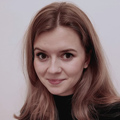 Justyna (student of second-cycle programme)
Speech-Language Therapy programme is a great place to acquire knowledge that allows you to start working in the profession. My biggest (positive) surprise was the way of organising the taught content, which includes weekly thematic blocks. Thanks to it, we do not receive 'shredded' and fragmented knowledge, but we immediately have the opportunity to see a given dysfunction through the prism of diagnosis, therapy, sources of origin and prognosis; in addition, specific examples of patients teach an empathetic approach to a given individual from the beginning. It is also a great combination of fields of interest: linguistics and knowledge in medicine.
 Anna (student of second-cycle programme)
Studies in Speech-Language Therapy are a new and exciting experience for me. The study programme is based on the case study formula, which requires each student to be involved, making the learning process more pleasant. Every week, we learn about a new case, learn about a given disorder a little more within the coordinated subjects, and then together, we create a treatment plan. I learn something new at every step, and the unique formula makes studying much more enjoyable. Studies in this field prepare us to work as speech therapists working with children and adults.
From our lecturers
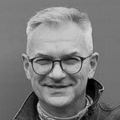
 Late dr. hab. Robert Dębski, prof. UJ – Head of the Department of Speech-Language Therapy – on the second-cycle studies
Our speech therapy studies emphasise the practical preparation of students to perform a beautiful but also demanding profession of a speech therapist. This is mainly due to the organisation of the study program according to the principles of problem teaching. Our graduates compare to participating in the "game" or solving "puzzles" from which they derive motivation to learn. At the same time, the studies strongly emphasise the psychosocial dimension of speech therapy disorders and the need for our graduates to participate in science in creating the scientific basis of the still young discipline of speech therapy.
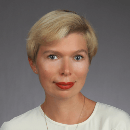 Dr. hab. Małgorzata Sokalska, prof. UJ – Vice Dean of the Faculty of Polish Studies – on the long-cycle, five-year master's programme
Speech-Language Therapy is, on the one hand, a relatively young field of study that is only now launching in the full form of a long-cycle master's programme. On the other hand, it draws on the experience of many master's degree cycles with the same profile, whose graduates are respected practitioners working in schools, therapy clinics, and beyond, as well as conducting their own research in this field. The opportunity to gain comprehensive education in a single academic institution, under the guidance of professionals with experience in various types of therapies and working with different patients – both children and adults – is a unique advantage of the Speech-Language Therapy programme at Jagiellonian University. However, the most important aspect, in my opinion, is the teaching method that emphasizes the practical dimension. A speech-language therapist today is more than just a specialist in correct pronunciation, though that remains their fundamental competence. They are also a guide in communication problems, providing support for children and assistance for elderly individuals struggling with various disorders resulting from age or past illnesses. Speech-Language Therapy can diagnose the problem, determine its source, and conduct effective therapy – but only if the therapist’s education is comprehensive. This is the kind of education that can be gained in the Speech-Language Therapy programme offered by the Institute of Glottodidactics at the Faculty of Polish Studies at Jagiellonian University.
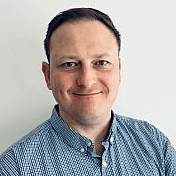 Dr Rafał Młyński – Head of the Long-Cycle Master's Programme
The five-year format of the Speech-Language Therapy programme is Jagiellonian University’s response to the increasing societal demand for highly qualified and comprehensively prepared speech-language therapists working with children, adolescents, and adults. Students of this programme will be thoroughly equipped with linguistic, speech-language therapy, and medical knowledge necessary for diagnosing and treating speech, language, and primary function disorders. The five-year curriculum is based not only on traditional teaching methods but also incorporates problem-based learning (PBL) and student-centred learning (SCL).
Go to the video
All about admission
- Admission statistics
- Welcome to the Jagiellonian University
- Admission for programmes in Polish
- Online Application System
- International Students Office
Admissions Office
Centre of Academic Support
welcome.uj.edu.pl
welcome@uj.edu.pl
ul. Ingardena 6, 30-060 Kraków, Poland
Admission to studies
Admission to study programmes at the Jagiellonian University is conducted electronically in the Online Application System: irk.uj.edu.pl. If you have any questions related to admission, please contact the Admissions Office directly or visit the websites: welcome.uj.edu.pl and irk.uj.edu.pl.
Detailed information about admission to this study programme, including information on the method of calculating the result, qualification criteria, fees, deadlines, and a list of required documents are available on the Online Application System (IRK): irk.uj.edu.pl
Transfer from other university or study programme
Transfer from another university, including a foreign one, or change of study programme within the University is possible with the dean's consent after completing the first year of studies and fulfilling additional requirements established by the Faculty Council. For inquiries regarding transfer, please contact the unit responsible for the specific study programme directly.
See also
- Job offers, internships, and volunteerings for students
- Workshops & presentations
- Career counseling
- Mentoring support
- JU Alumni
Careers Service
Centre of Academic Support
biurokarier.uj.edu.pl
kariery@uj.edu.pl
ul. Ingardena 6, 30-060 Kraków, Poland
Graduates
Students of the two-year (second-cycle) and five-year (long-cycle master's) programmes gain professional experience through an extensive internship programme carried out in schools, clinics, and healthcare institutions, as well as during group work in problem-based learning sessions. Graduates of the Speech-Language Therapy programme possess the knowledge necessary to diagnose communication disorders and provide real support to children and adults with various deficits in this area. They can pursue careers in public or private educational institutions, special education centers, psychological-pedagogical counseling centers, hospitals in otolaryngology or neurology departments, phoniatric clinics, rehabilitation centers, state-run specialist clinics (e.g., for individuals with hearing impairments), private speech therapy practices, or orthodontic clinics.
Further education possibilities
- Doctoral School, f.e. Doctoral School in the Humanities
- Post diploma programmes
- Second-cycle programmes
What alumni say about us
 Alumni Stories: Urszula Malina
As a graduate of the first edition of the Speech-Language Therapy study programme at the Jagiellonian University, I can safely say that these studies offer several opportunities for self-development. They guarantee to obtain a diploma and the title of a speech therapist and work in valued medical, rehabilitation, and school facilities. They open the door to scientific and research work, didactic work and participation in significant scientific projects. Qualified lecturers educate speech therapists - linguists, and at the same time, conscious therapists, who can take care of patients from the moment of diagnosis until the last therapeutic meeting. Studying at the Jagiellonian University is a time of intensive learning, broadening thought horizons and verifying one's competencies concerning helping people with various communication problems.
University in close-up
Centre for Communications and Marketing
Offer for school
The following events are conducted in Polish – to find out about the offer for English-speaking audience, please get in touch with the organizer directly. Additionally, due to the current pandemic, some faculty and university events may be canceled or conducted in a form other than that described below.
We invite all schools to take part in the cycle of meetings "University Closer to You – visits to the Jagiellonian University". The aim of the meetings during the tours is to familiarize students with the history of our University through a rich educational offer (lectures, workshops, laboratory classes, etc.). The current programme of the event is available on the organizer's website – the Centre for Communications and Marketing of the Jagiellonian University.
The Jagiellonian Library offers tours of both the old and new parts of the building. The tour programme includes presentations on the history of the Library and the building itself, as well as a visit to the Department of Depositories. The offer of the Collegium Maius includes lessons on "The Trail of Science" and "The Trail of History and Art," as well as interactive online classes. We also invite you to explore the educational offer of the Botanical Garden, the Nature Education Centre, the Confucius Institute, and the Museum of Anatomy.
Contact
The study programme is conducted at the Center for Polish Language and Culture in the World, a unit of the Faculty of Polish Studies. The Center is located in the historic centre of Kraków. For more information, please contact:
rafal.mlynski@uj.edu.pl, dziekanat.wpuj@uj.edu.pl
ul. Grodzka 64
31-044 Kraków, Poland
Phone: (+48) 12 663 18 13
igp.polonistyka.uj.edu.pl
polonistyka.uj.edu.pl